


Updated 20 November 2026
You followed the instructions, but a few minutes in the skin started to sting, or it looked fine until it turned red and sore later that evening. Hair removal creams work by breaking down the protein in hair, and on some skin, or when left on too long, they irritate the skin itself. Most reactions are mild and settle at home within days. This guide covers hair removal cream burn treatment step by step, what to avoid, how long healing takes and when to see a doctor.
General skincare information from the Face Fresh team, not a medical diagnosis. If you are worried about your skin, see a doctor or pharmacist.
Right now: the first 20 minutes
- Wipe off every trace of cream with a damp, soft cloth. Do not rub hard.
- Rinse with cool running water for 10 to 20 minutes. Cool, not icy. Water dilutes and removes the alkaline cream, which is the single most useful thing you can do.
- Pat dry with a clean towel.
- Leave the area alone: no deodorant, perfume, body lotion with fragrance, scrubs or tight clothes.
Mild irritation, chemical burn or allergy?
- Mild irritation: pink skin, slight warmth or tingling that fades within a few hours to a day. Very common, especially on underarms.
- Chemical burn from hair removal cream: bright red, sore or raw-feeling skin, sometimes shiny, weeping or blistered. Usually happens when the cream stayed on too long, was used on freshly shaved skin, or on a thin-skinned area.
- Allergic reaction: itchy rash, bumps or hives, sometimes spreading beyond where the cream was, and sometimes appearing the next day. Swelling of the face, lips or tongue, or trouble breathing, is an emergency: call 998 in the UAE.
The next days: helping the skin heal
- Keep the area clean with plain water and a mild, fragrance-free cleanser.
- Apply a thin layer of plain petroleum jelly or a fragrance-free barrier cream two or three times a day. It protects the skin while it repairs.
- A cool, damp cloth for a few minutes eases burning and itching.
- Wear loose cotton clothing over the area.
- Do not pop blisters. If one breaks, keep it clean and covered with a non-stick dressing.
- Keep the area out of strong sun, which can leave a dark mark behind.
For itching on unbroken skin, a pharmacist can suggest a suitable mild anti-itch cream. Do not put anything medicated on open or blistered skin without advice.
What not to put on the burn
Skip home remedies that make chemical burns worse: lemon juice, vinegar, toothpaste, perfume or alcohol, raw aloe straight from the plant, essential oils, scrubs and whitening creams. Ice applied directly can damage the skin further. Simple is best until the skin has closed and calmed.
How long does it take to heal?
Mild redness usually fades in one to three days. A superficial burn with peeling often takes one to two weeks. A darker patch left behind (post-inflammatory hyperpigmentation) is common on brown and olive skin, especially under the arms, and can take several weeks to a few months to fade.
Underarm darkening after hair removal
Darker underarms after hair removal are usually a sign of irritation rather than the cream “staining” the skin. Friction, sweat, deodorant on irritated skin and repeated hair removal all add to it. To help it fade: let the skin heal completely first, avoid scrubbing, choose a gentle deodorant, and leave a few days between hair removal sessions. Only start a brightening product once there is no redness or soreness left. If the dark area is velvety, spreading, or appears without a clear cause, see a doctor, because it can be linked to other health conditions.
When to see a doctor
- Blisters, open or weeping skin, or a burn larger than the palm of your hand.
- A burn on the face, genitals or near the eyes.
- Pain that gets worse after two days instead of better.
- Signs of infection: pus, spreading redness, red streaks, warmth or fever.
- Any swelling of the face or lips, or breathing difficulty: emergency care immediately.
- If you have diabetes, a weak immune system, or you are pregnant and unsure what you can use.
Using hair removal cream safely next time
- Patch test a small area 24 hours before every new product, and again if you have had a reaction before.
- Never go over the maximum time printed on the pack. Set a timer.
- Do not use it on skin you shaved, waxed or scrubbed in the last 24 to 72 hours.
- Keep it off the face unless the pack says so, and away from broken or sunburnt skin.
- Choose a gentler formula for sensitive areas and sensitive skin.
Which Easy Fresh product for which skin?
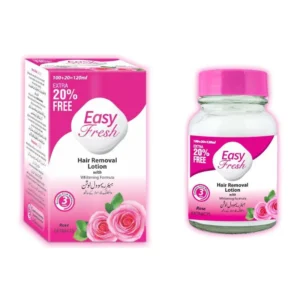
- Easy Fresh Hair Removal Lotion: the gentlest, with niacinamide and vitamin E. Start here if you have reacted before.
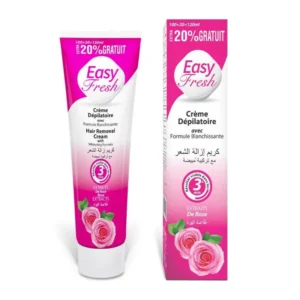
- Easy Fresh Hair Removal Cream: the stronger formula for legs, arms, underarms and men’s body hair.
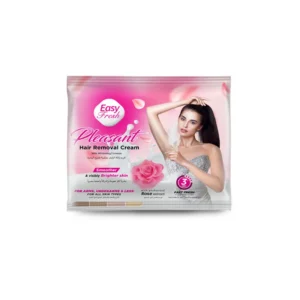
- Easy Fresh Pleasant Hair Removal Cream: a 20g single-use sachet.
Products from this guide
Frequently asked questions
Can I use aloe vera on a hair removal cream burn?
A plain, fragrance-free aloe gel from a pharmacy can feel soothing on closed, unbroken skin. Avoid raw plant gel and perfumed products, and do not use anything on open skin without advice.
Can I shave or use the cream again soon?
Wait until the skin is fully healed, with no redness, peeling or soreness. That is usually one to two weeks. Then patch test before using it again.
Why did my skin burn when I used the same cream before without problems?
Skin changes day to day. Recent shaving, a scrub, sunburn, heat and sweat, or a slightly longer time all make a reaction more likely.
Is the dark mark permanent?
Usually not. Most marks fade over weeks to months with gentle care and sun protection. If a mark stays beyond a few months, a dermatologist can help.
Questions about your skin or our products? Message the Face Fresh UAE team on WhatsApp +971 56 842 8933, or browse our hair removal range.


